LimitAn approximate reference distance; distances to individual points within the image are not supplied by the observation.
AppearanceReconstructed
Observation-derived appearance
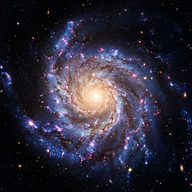
The close view follows the interacting bodies and tails. The background field is not placed at the pair’s distance; orbit and tail depth remain illustrative. Small foreground or background sources inside the selected apertures may remain; they do not have individually measured depths. Projected structure follows the credited observation at its published angular scale and an approximate adopted distance. Shallow depth is illustrative, not measured tomography. The source palette is preserved; brightness is adjusted for the navigable view.
Appearance: a reconstruction from measurements, not a direct observation. Observation-derived appearance. The close view follows the interacting bodies and tails. The background field is not placed at the pair’s distance; orbit and tail depth remain illustrative. Small foreground or background sources inside the selected apertures may remain; they do not have individually measured depths. Projected structure follows the credited observation at its published angular scale and an approximate adopted distance. Shallow depth is illustrative, not measured tomography. The source palette is preserved; brightness is adjusted for the navigable view.
 Space Time