 Space Time
Visit other solar systems
Browse thousands of confirmed systems from the published NASA Exoplanet Archive snapshot. Open one to inspect measured orbit properties, compare our Solar System, and explore the discovery method. The app reports current counts and source dates.
🚀 Visit other star systems Free · Weekly source checks · Measured properties · Disclosed scale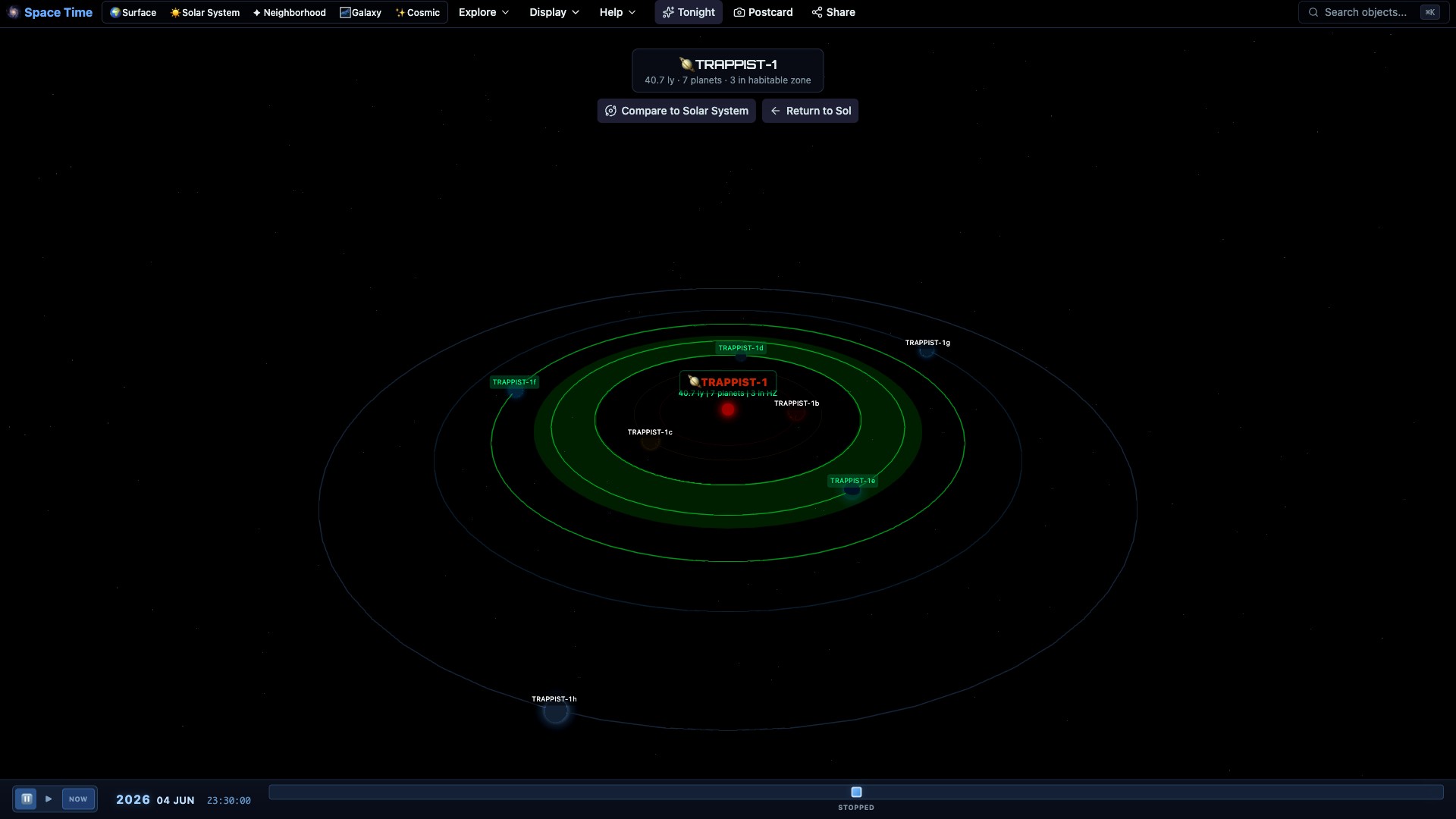
Measured properties and reconstruction limits
Search more than 6,200 planets by host star or planet name, or filter for nearby stars, multi-planet systems, and planets in the habitable zone. Measured eccentricity is included when the archive provides it, so an elongated orbit appears that way in the model.
How we found it
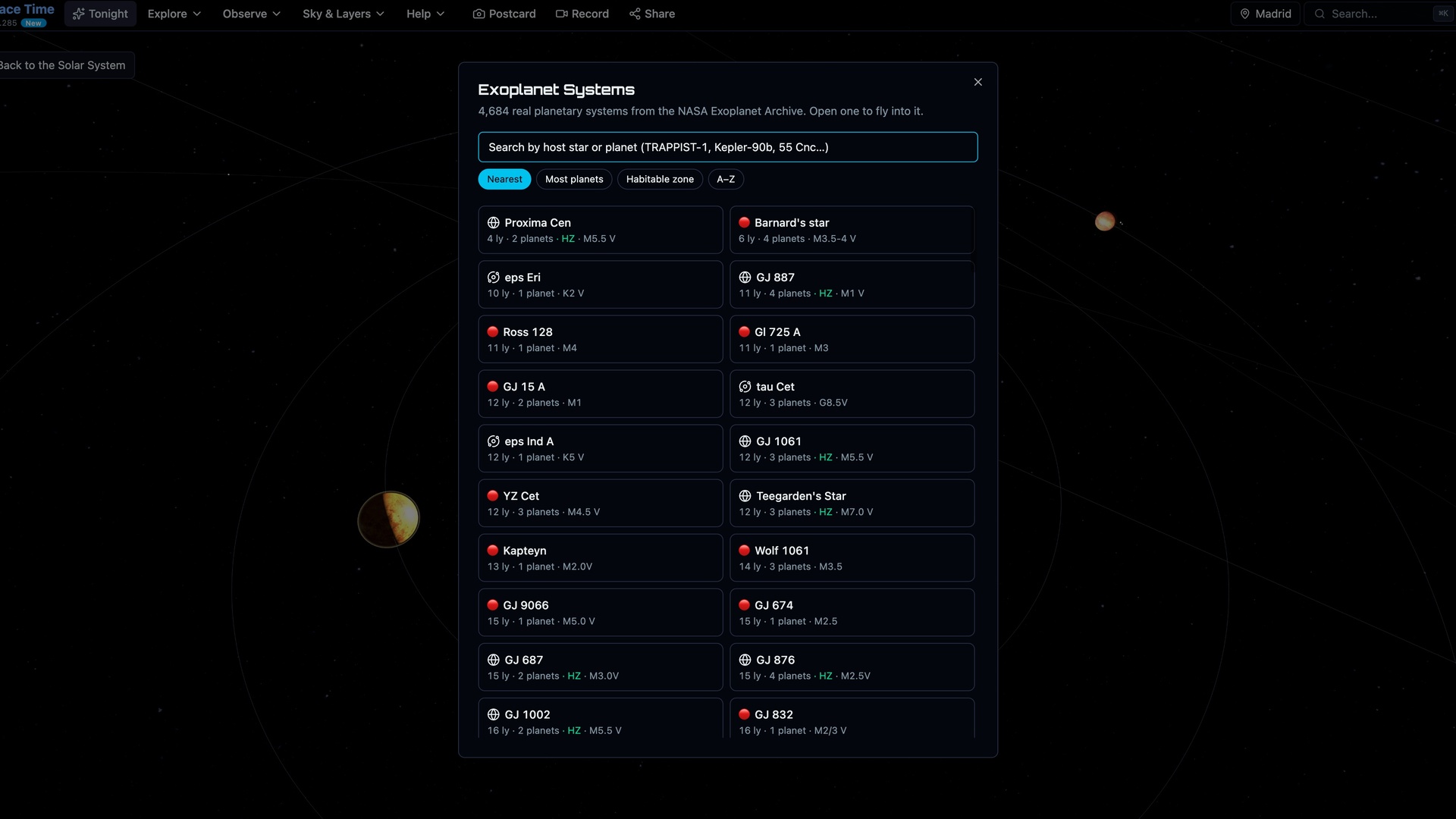
The discovery view explains transit, radial velocity, direct imaging, and microlensing with an animation based on the planet's published parameters. If the host star is above your horizon tonight, Space Time also tells you where to look.
Compare to our Solar System
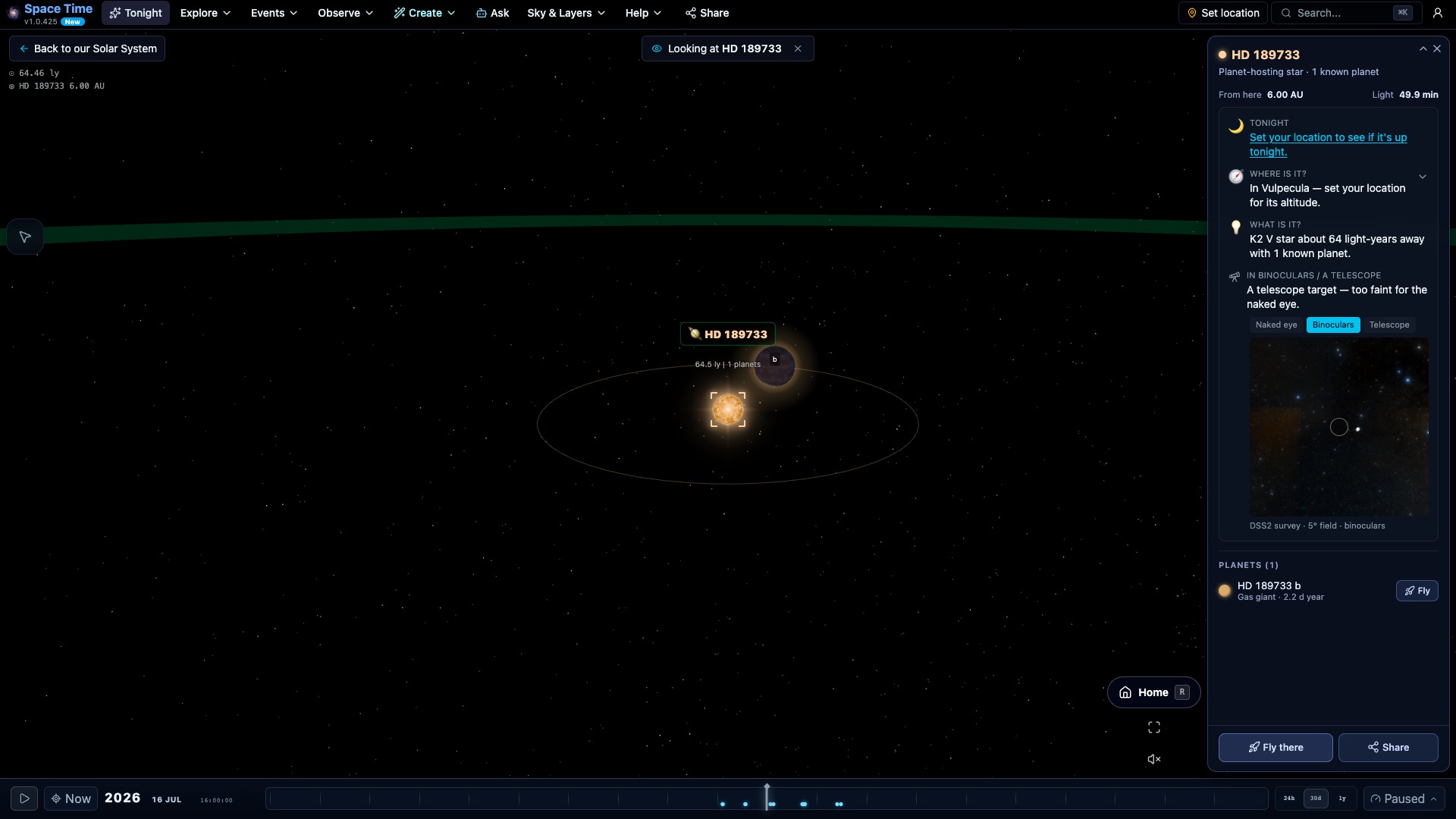
One tap drops our Solar System's orbits in at the same scale. TRAPPIST-1 is a good one to try first: all seven of its planets orbit closer to their star than Mercury does to ours, and seeing both systems drawn together makes that real.
FAQ
Which exoplanet systems can I explore?
The weekly NASA Archive snapshot contains thousands of confirmed systems. Systems and transit targets use the same accepted version, with dated offline copies when saved. The browser and Data freshness show current counts and checks.
Are the orbits real?
Published period, size and eccentricity constrain the reconstruction. Orbit sizes are drawn ×50 for visibility, with true AU values on the cards. Unmeasured phase and orientation remain reconstruction. The ordinary time controls drive the motion.
What's the habitable zone?
The band around a star where liquid water could exist. It's shaded in each system, so you can see which planets fall inside.
Can I see how each planet was discovered?
Yes. "How we found it" explains transit, radial velocity, imaging, or microlensing with the planet's published parameters.
Can I compare to our Solar System?
Yes. A one-tap overlay drops our orbits in at the same scale.
Can I see a host star in my own sky?
Often. If it's above your horizon tonight, Space Time tells you where to look and how bright it is.
Is it free?
Yes. In your browser, no account, no download.