 Space Time
What's up tonight
Check the observing forecast for your location, then see which planets and deep-sky objects are up, what the Moon is doing, and when the ISS passes overhead.
🚀 Open the sky map Free · No account · Set your location and go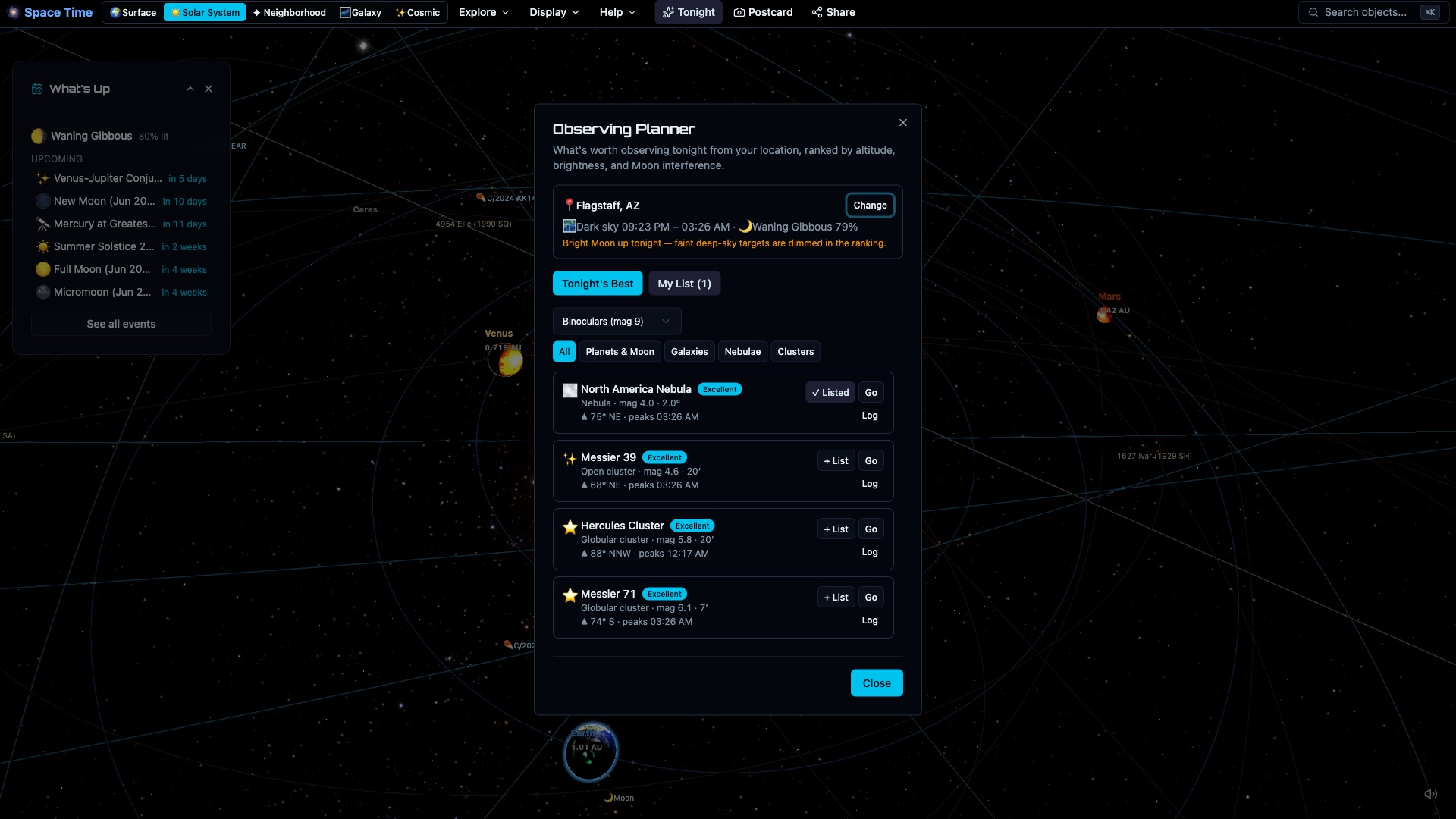
Follow a story. Keep a discovery.
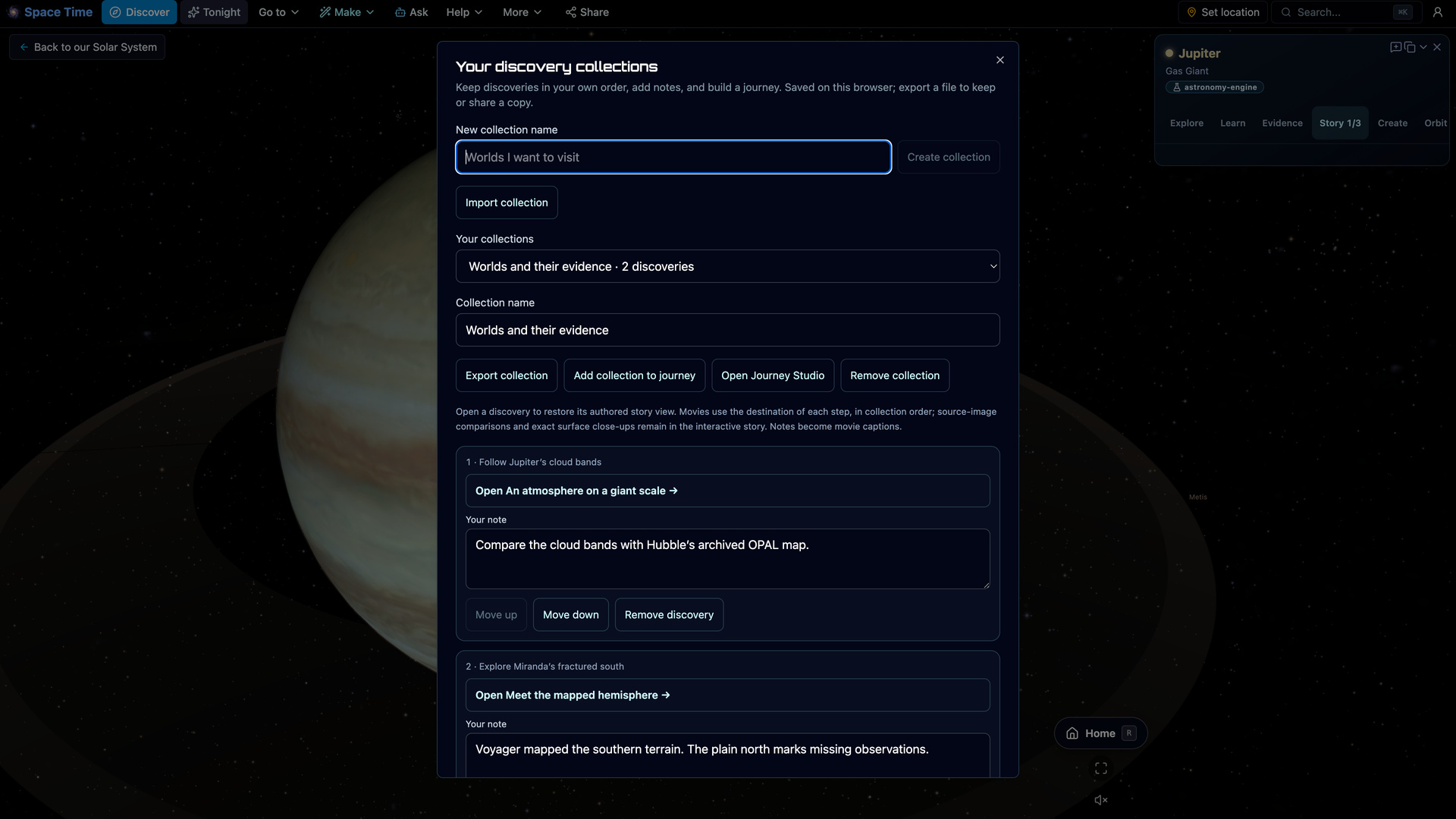
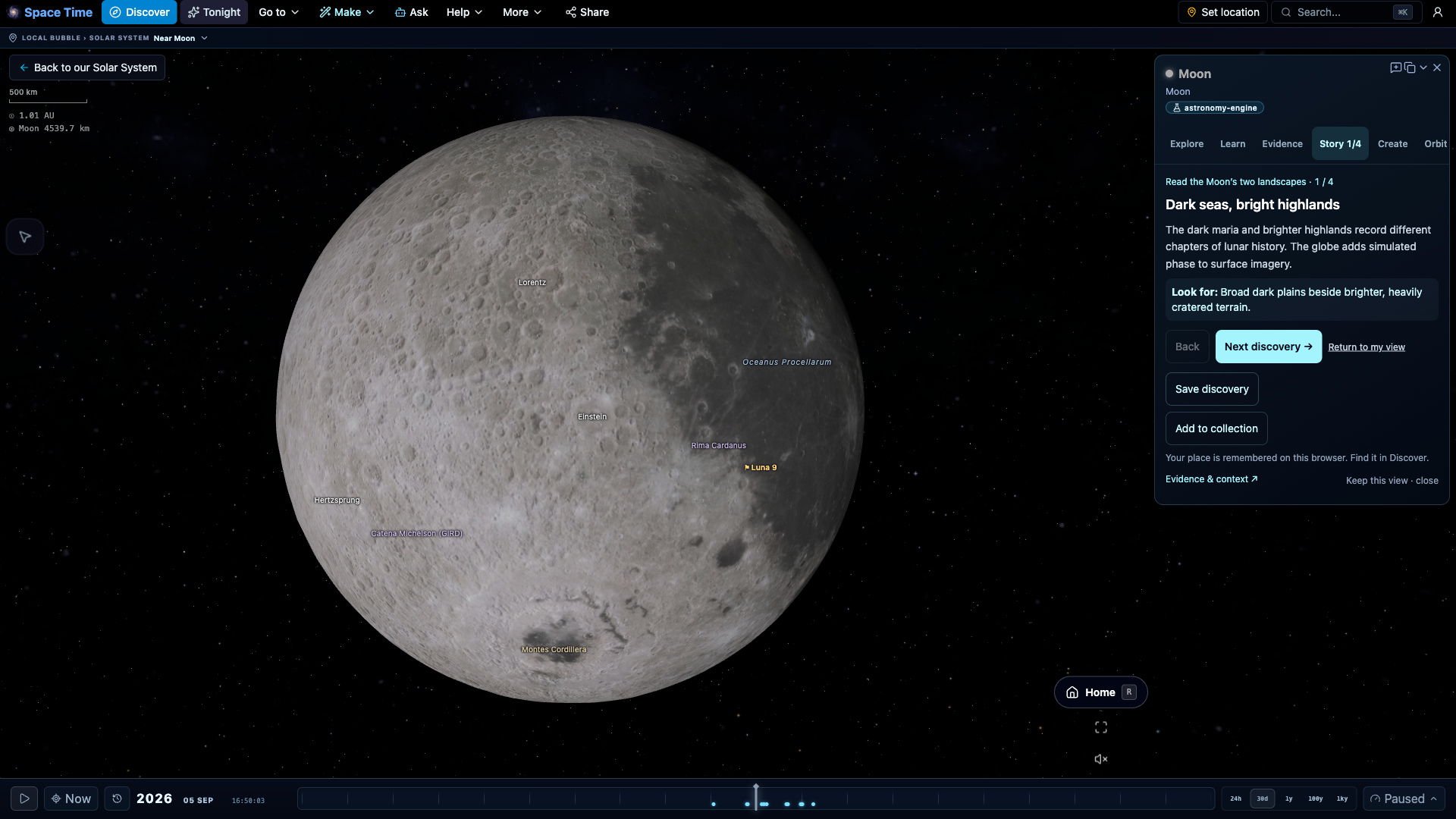
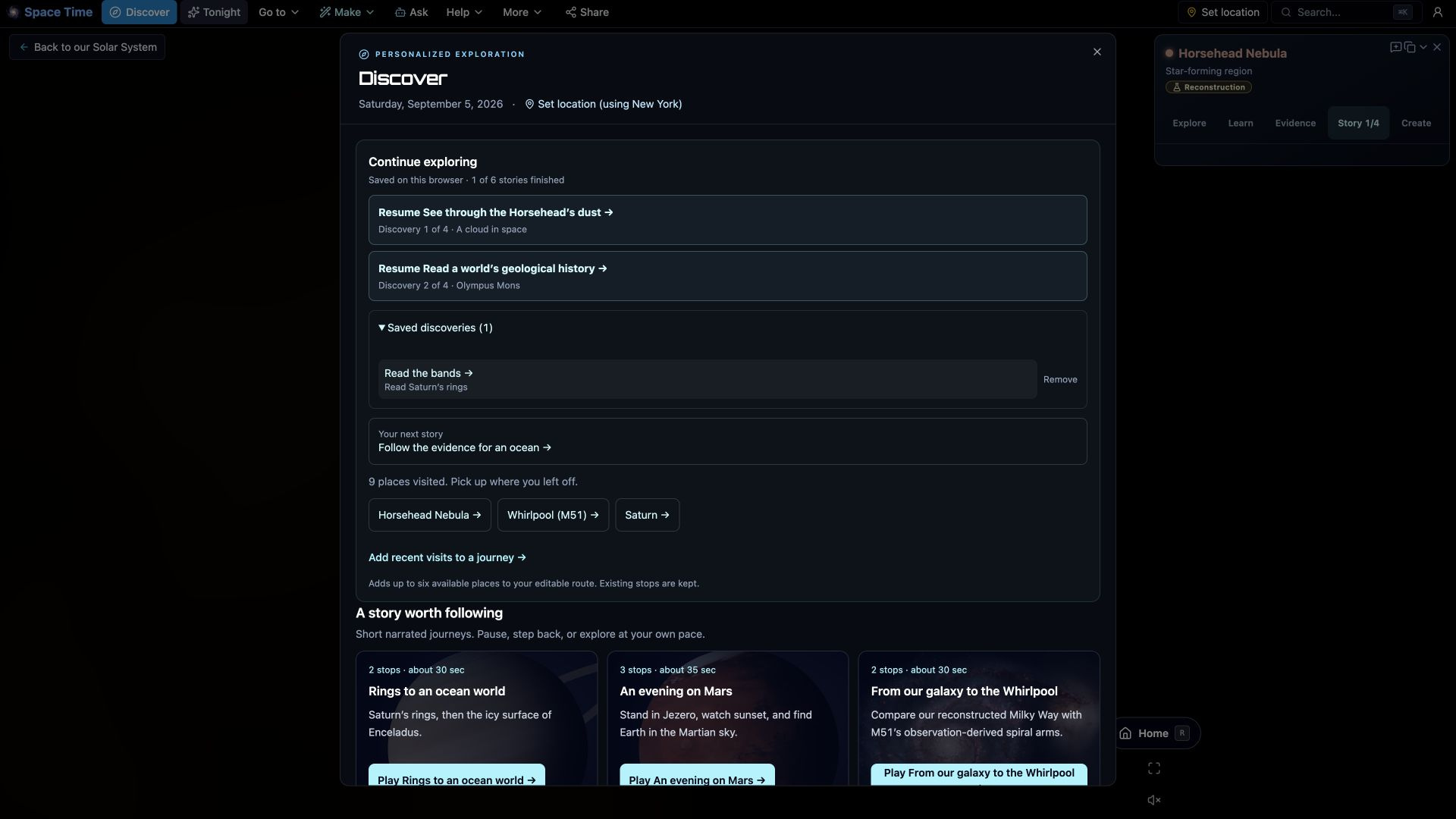
Explore new destination stories and build your own collection of views, evidence and notes.
More ways to explore and understand
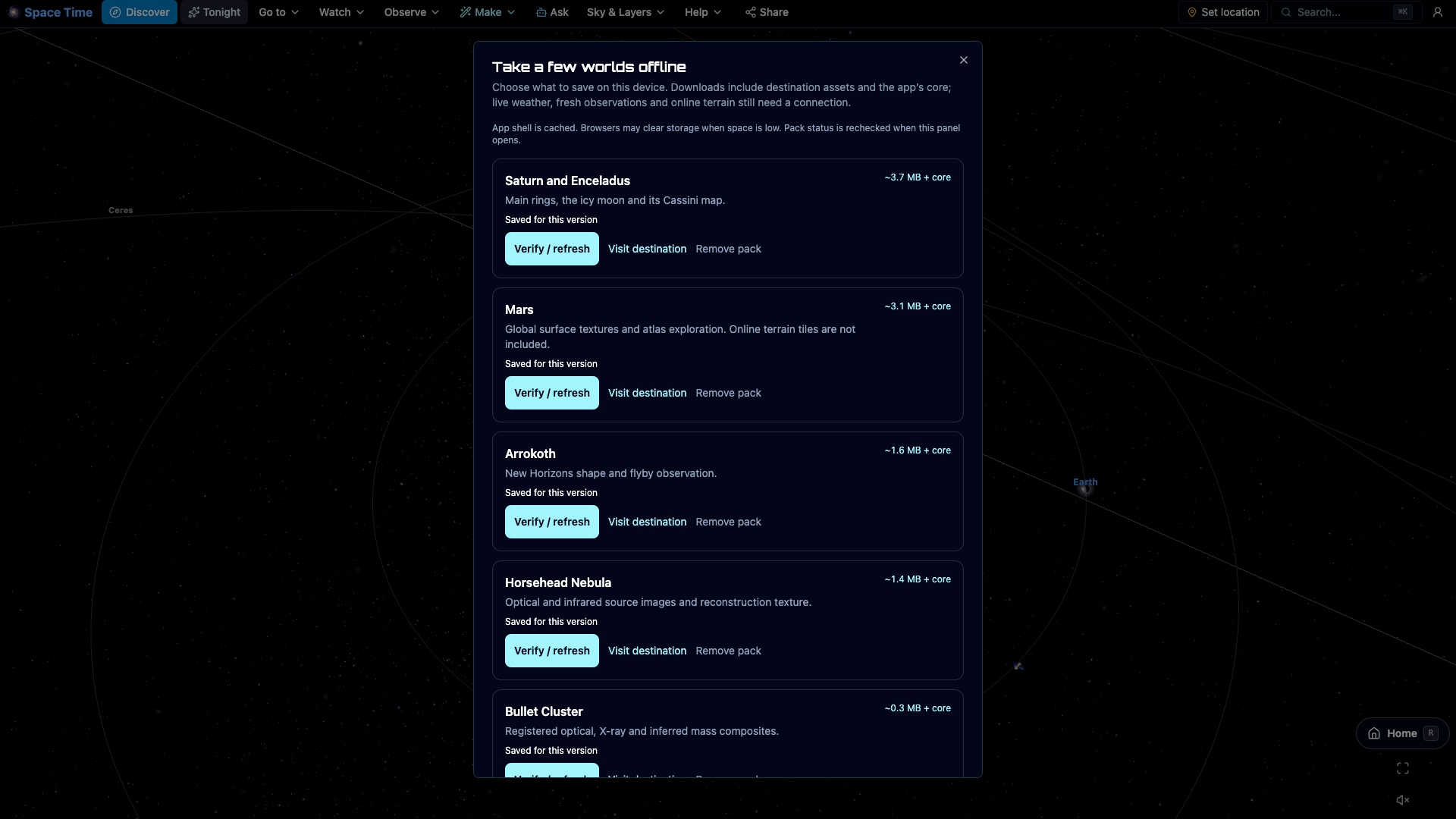
New tools connect the view, its evidence and your next discovery.
Is it worth going out tonight?
The 0 to 100 score combines cloud cover, seeing, transparency, rain, moonlight, and local light pollution. Check the hourly breakdown to find a clear stretch, or compare the next seven nights before choosing when to set up.
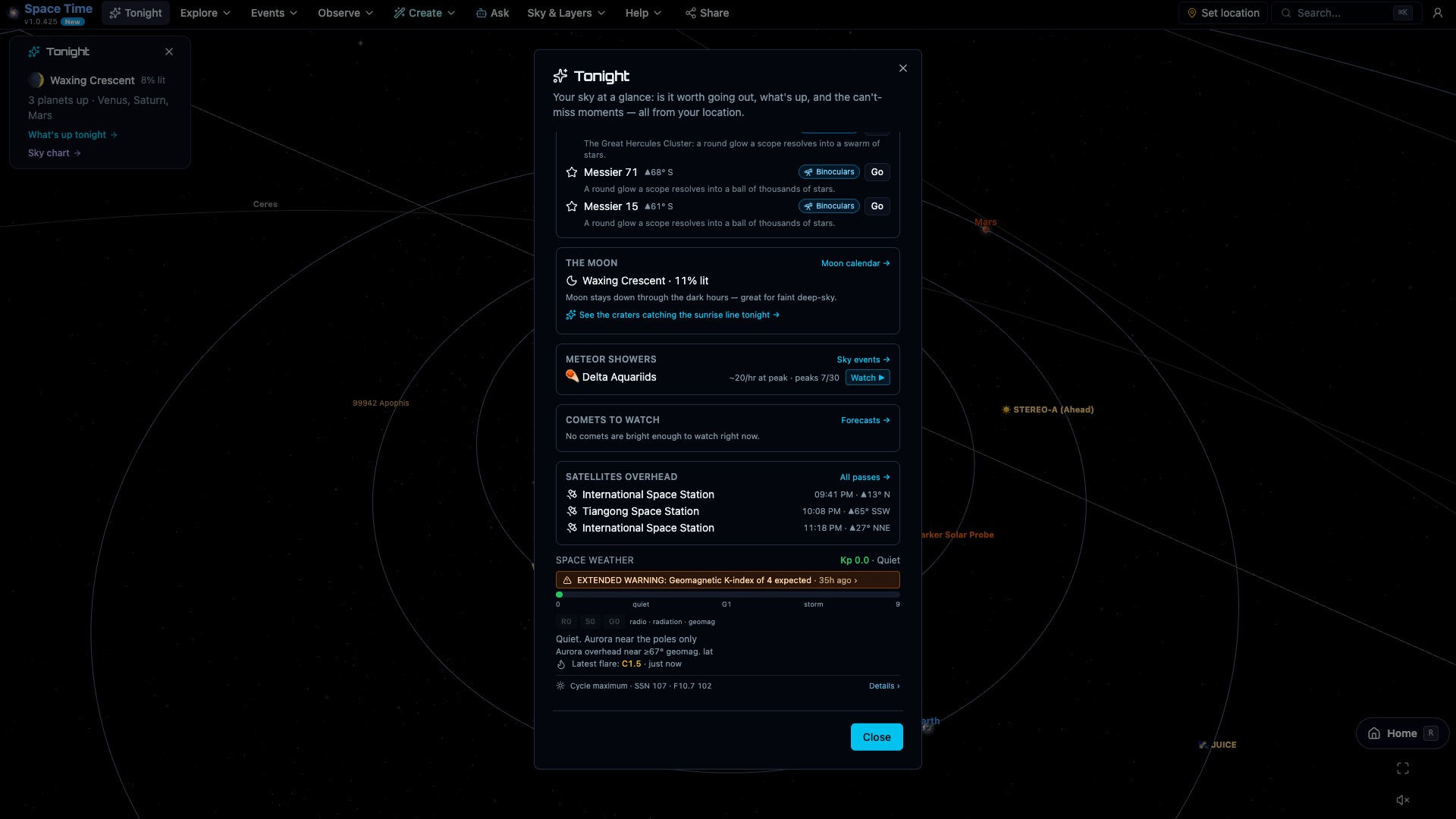
Tonight's Best, ranked for your location
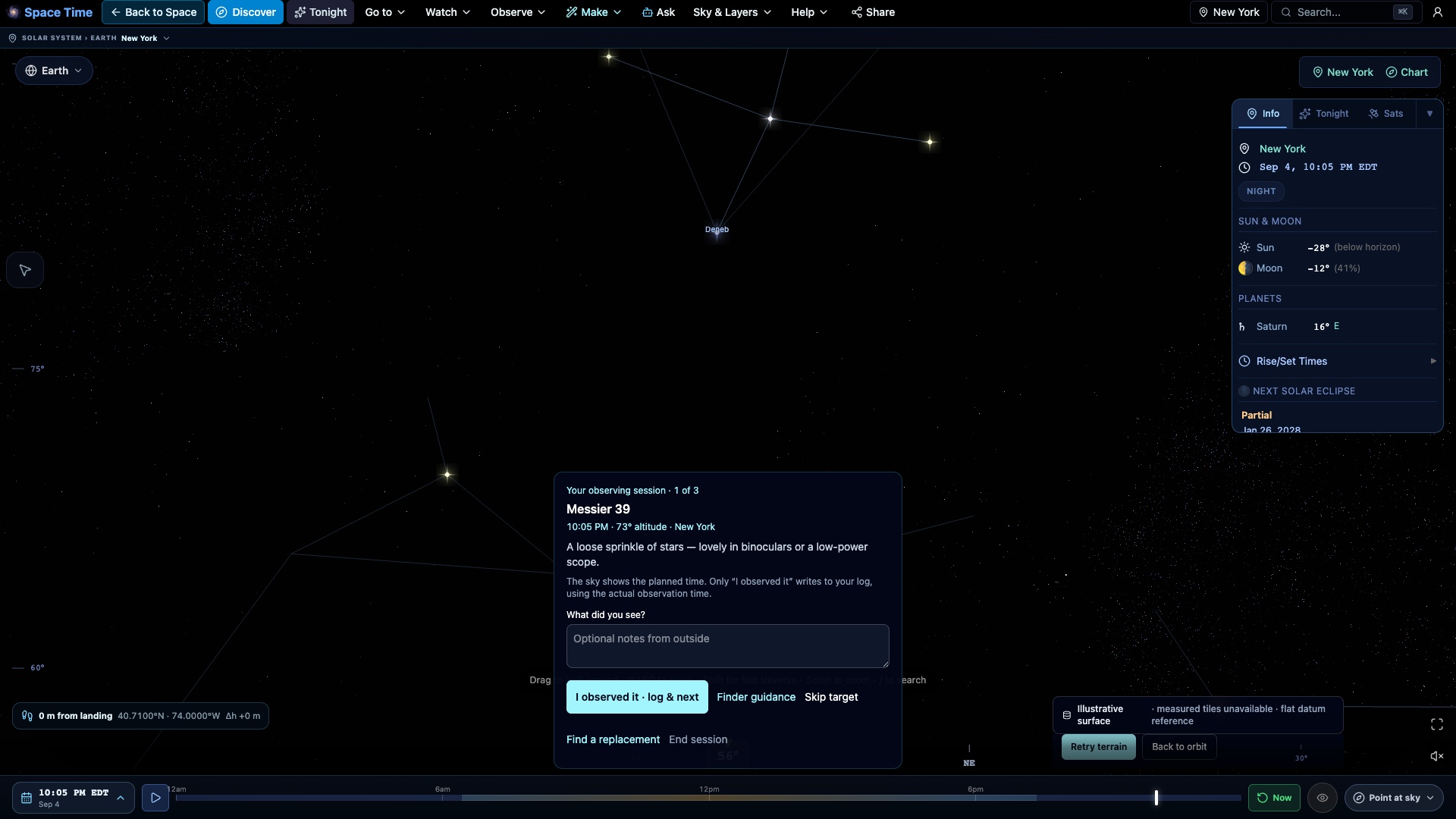
The planner ranks the Moon, planets, and 207 deep-sky objects for your location. It weighs altitude, brightness, and moonlight, then lists rise, transit, and set times in local time.
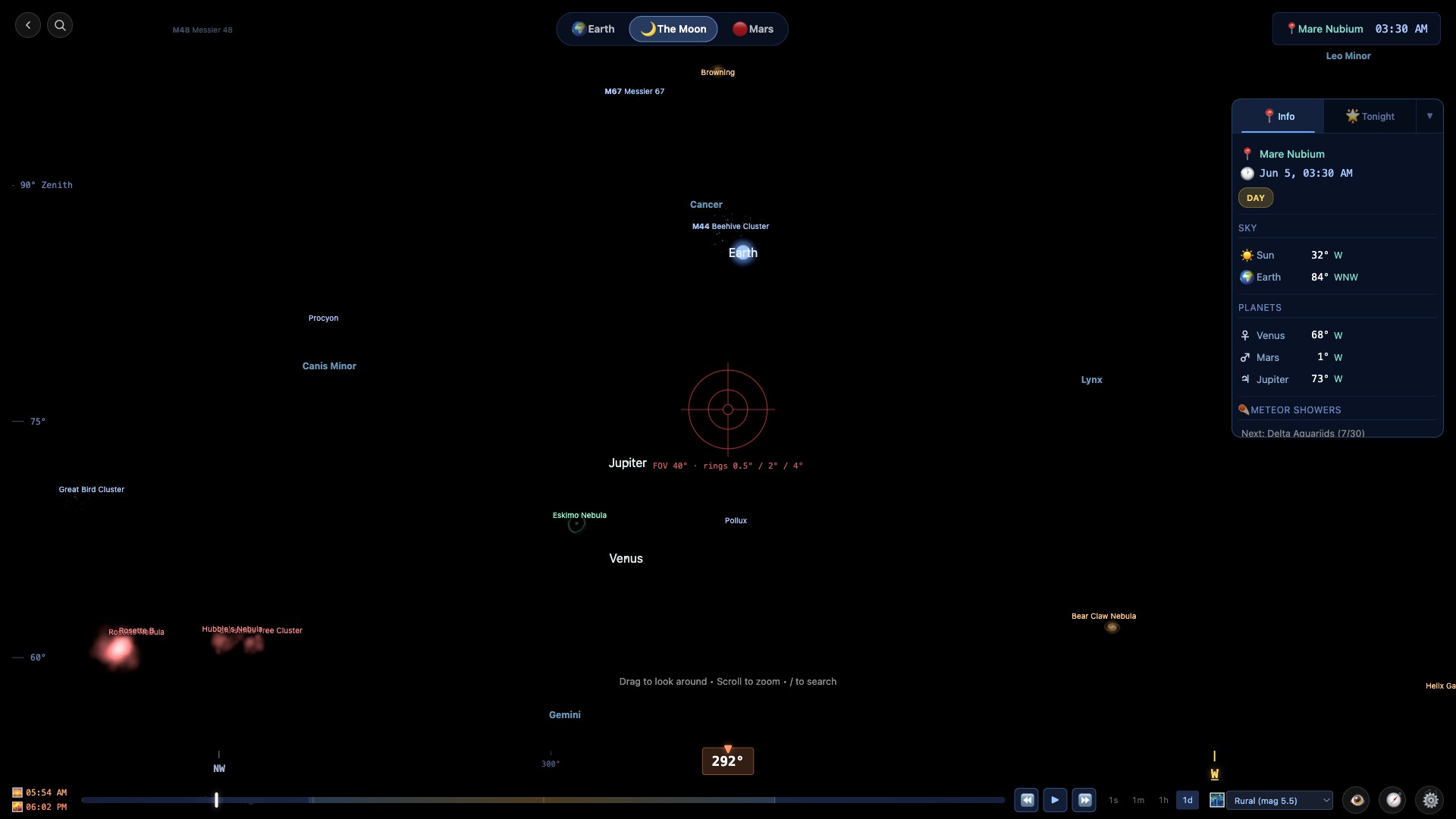
Where the planets are right now
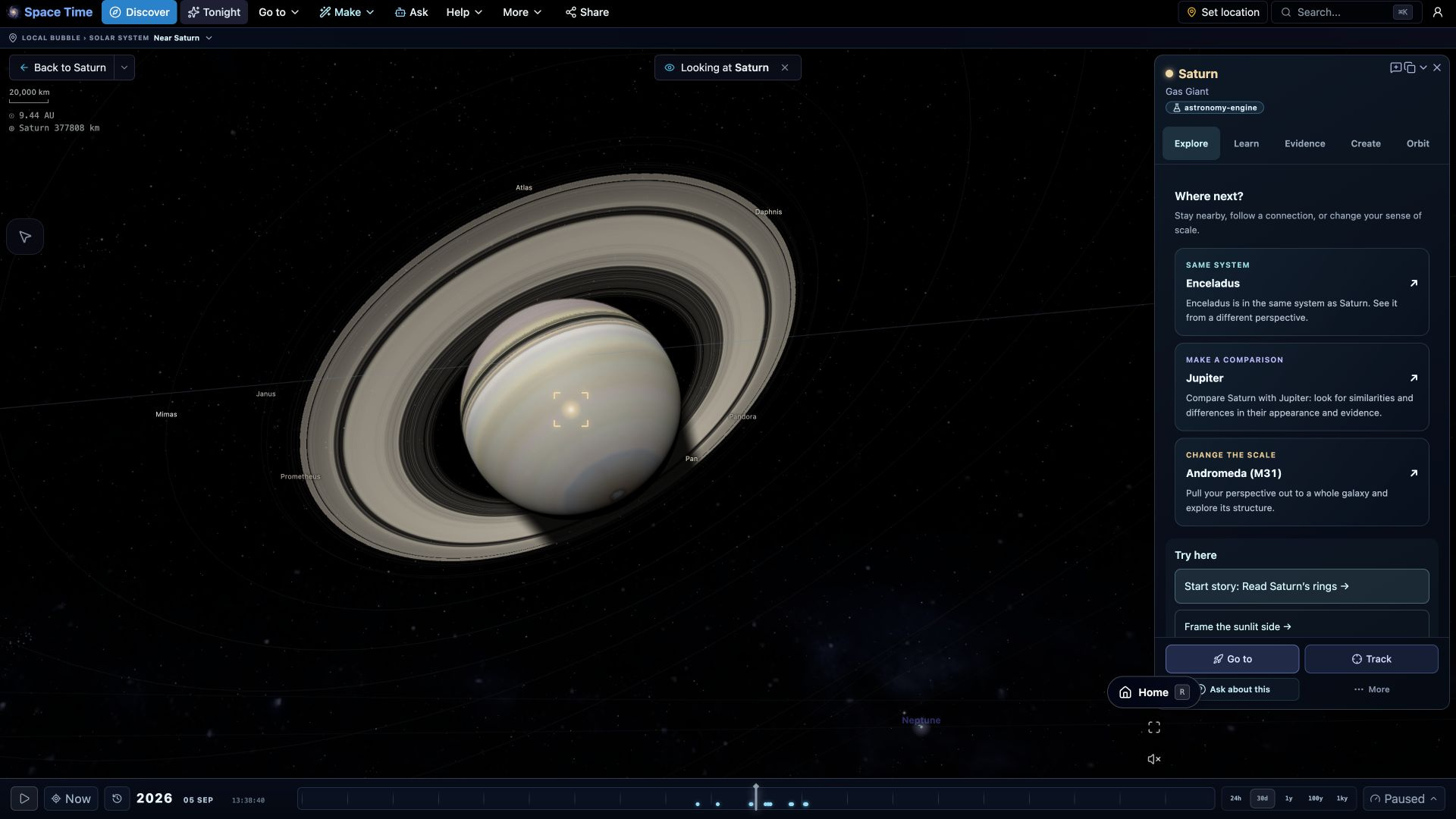
Every planet is placed with the astronomy-engine library, built on JPL ephemeris data, so Venus, Mars, Jupiter and Saturn show up where they actually are in your sky, to within about an arcsecond. Drop into the first-person planetarium view to see them against the constellations. Or stay in space and watch the same geometry from outside.
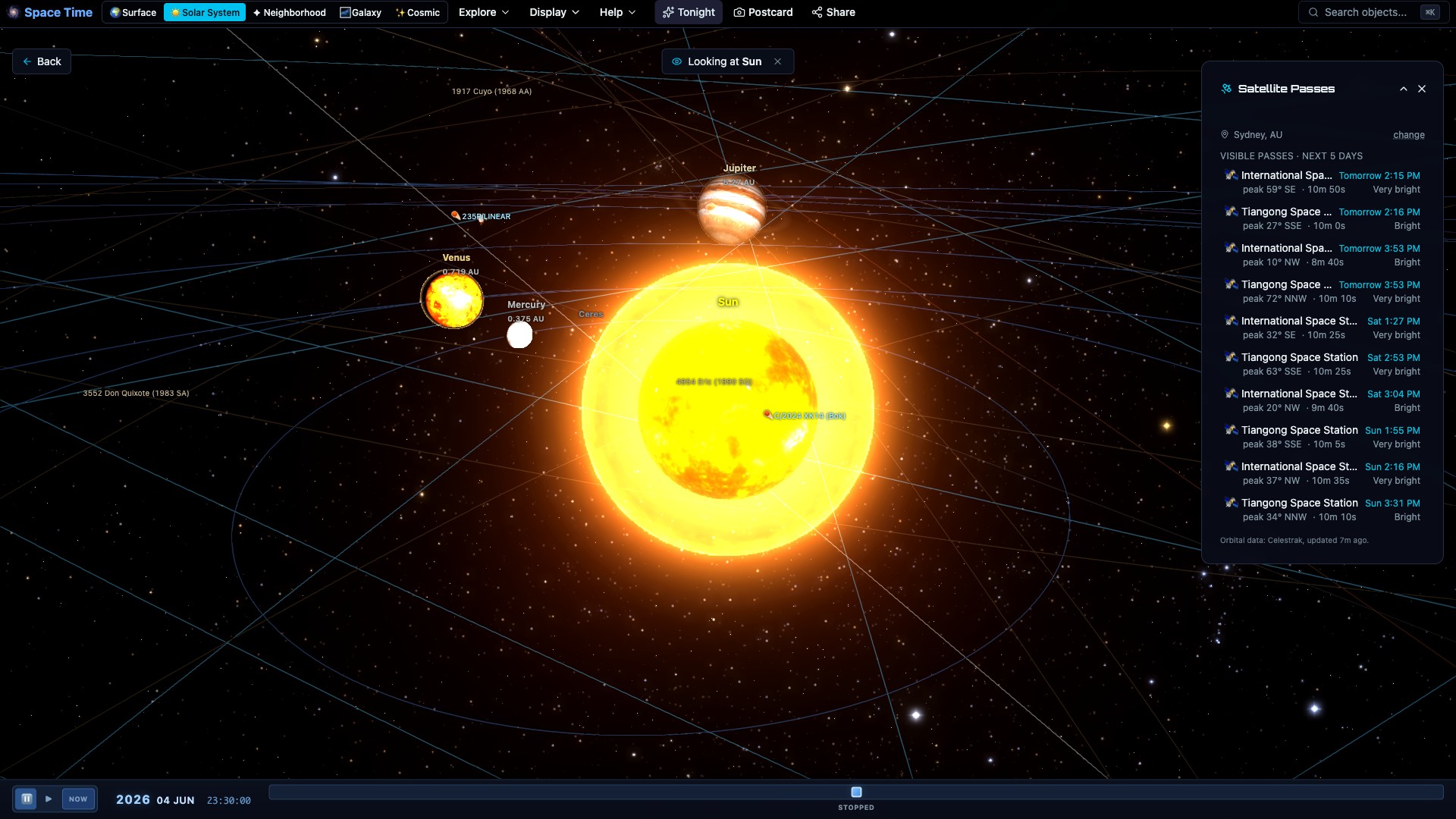
Catch the ISS & satellites
Pass predictions for the International Space Station, Tiangong and Hubble come from real two-line-element data run through the SGP4 propagator. You'll know when to step outside and which way to face.
FAQ
Will it be clear enough to observe tonight?
Space Time scores your sky from the real weather forecast: a 0 to 100 verdict weighing cloud, seeing (the jet stream), transparency, rain, the Moon and your light pollution, hour by hour, with the usable hours flagged. A seven-night outlook helps you pick the best evening.
What planets are visible tonight?
Set your location and open the observing planner or planetarium view. It shows which planets and the Moon are up, how high they get, and their rise/transit/set times for your date and place.
How do I find what's up from my location?
Enter your latitude/longitude or pick a city. The "Tonight's Best" planner ranks the planets, Moon and 207 deep-sky objects by altitude, brightness and Moon interference.
When can I see the ISS?
Space Time predicts visible ISS, Tiangong and Hubble passes from real TLE data with SGP4. Pick a pass and the clock jumps to it.
Is it free?
Yes. In your browser, no account, no download.