 Space Time
Stand on the Moon or Mars
Look up from Earth, the Moon, Mars, Mercury, Venus or a named reference site on Pluto. The giant planets offer disclosed cloud-deck observation levels. The shared clock drives the sky; measured terrain and reference surfaces keep their source limits visible.
🚀 Step onto another world Free · World picker · Measured terrain and disclosed reference sites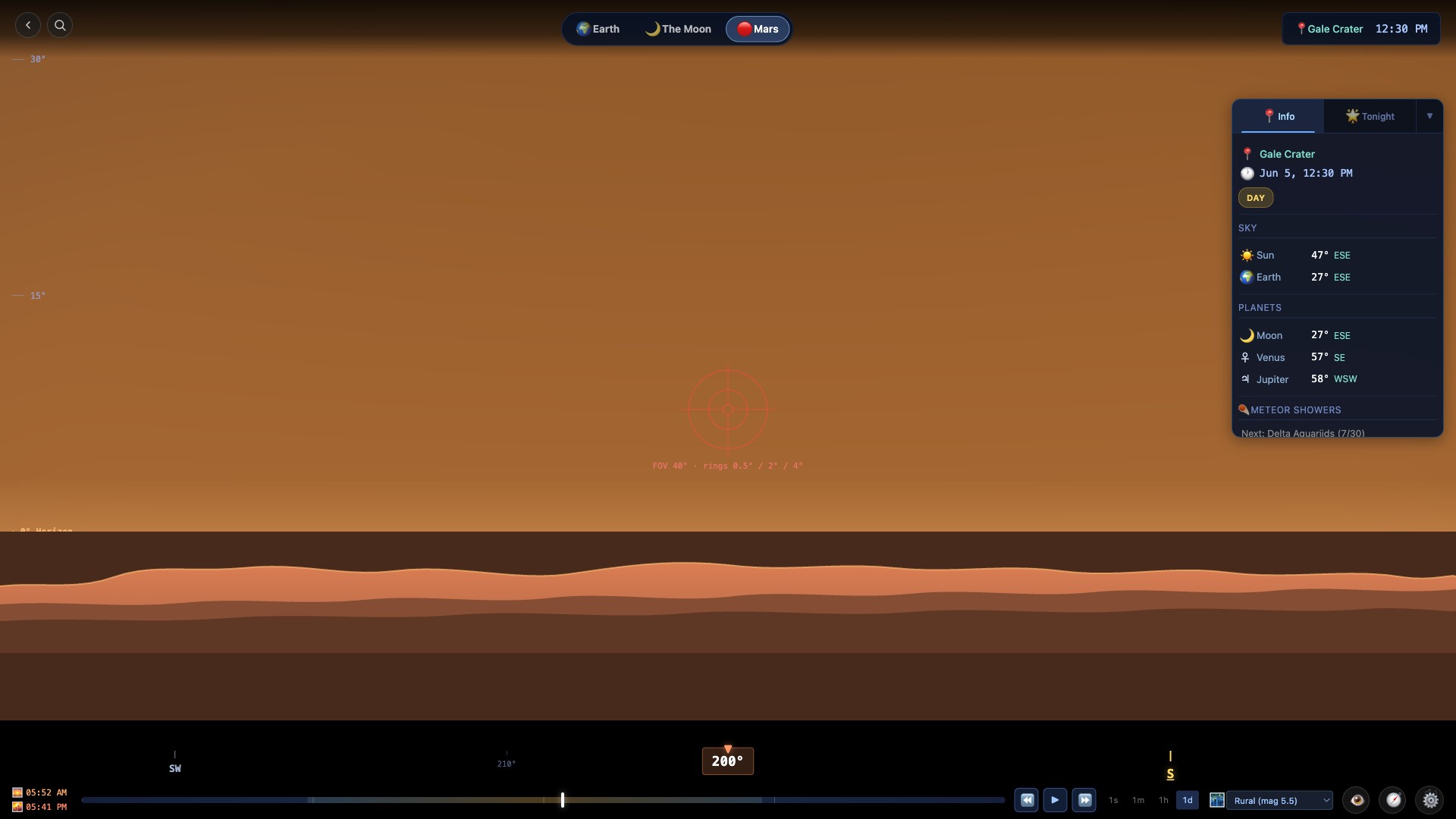
The sky from Mars
From Mars, the Sun looks smaller and Earth becomes a pale blue point near dawn or dusk. The constellations remain familiar, but their positions change with the Martian location and time you choose.
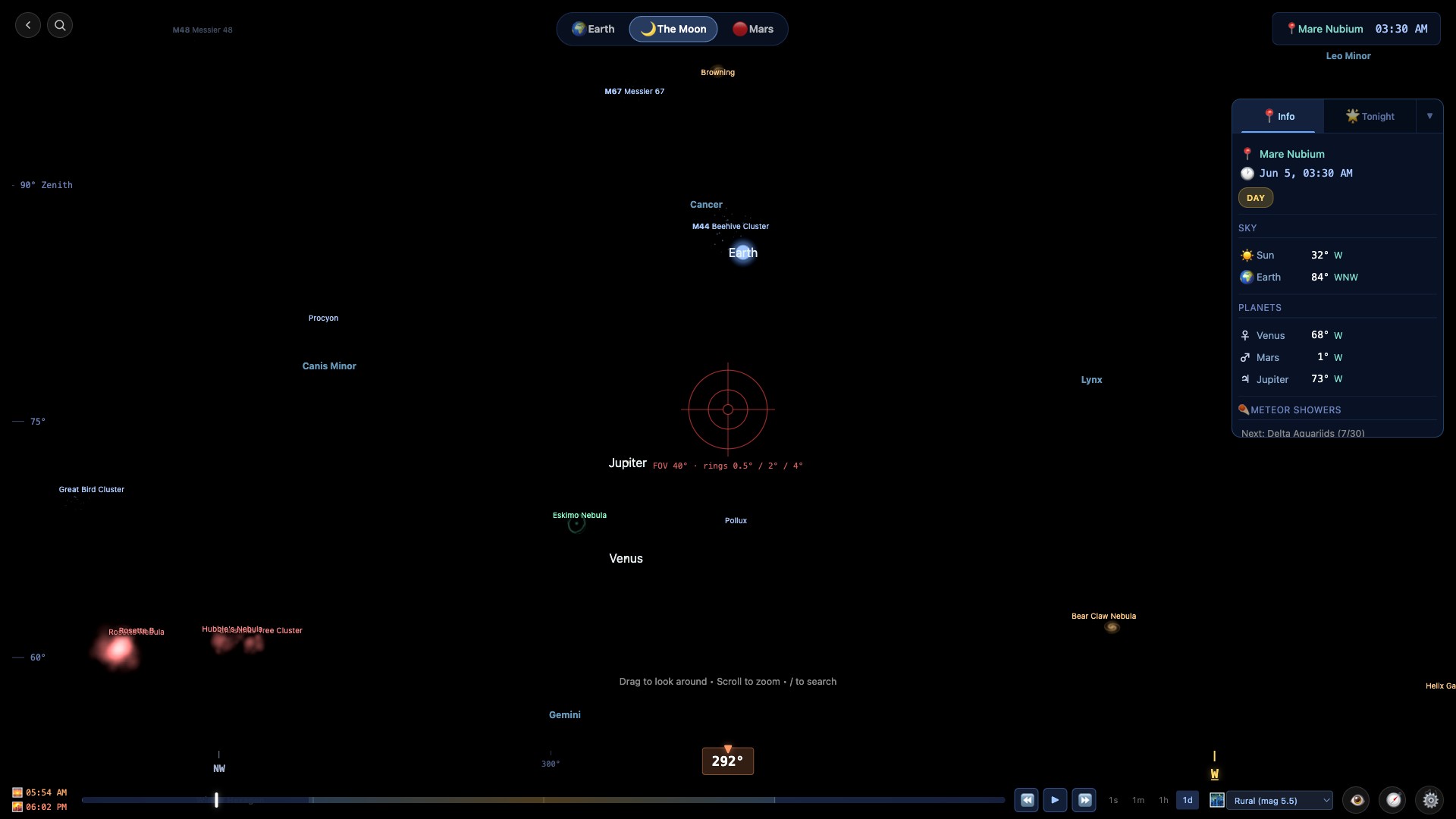
The sky updates with the clock
Solar System positions use the supported ephemeris pipeline; stars and deep-sky directions use their catalogs. Change date, time or a supported location and the same sky updates. Planet and Moon predictions are hidden outside the supported roughly 1500–3000 CE interval. Ground traversal on Earth, the Moon, Mars, Mercury and Venus stops at the trustworthy loaded terrain footprint; missing terrain stays a labeled flat reference.
FAQ
What does the sky look like from Mars?
A smaller, dimmer Sun, a distant Earth near dawn or dusk when visible, and familiar constellations. Positions change with the Martian location and shared clock, within the supported ephemeris interval.
Can I stand on the Moon?
Yes. Choose a supported lunar location in the world picker. Earth's position and visibility depend on the chosen site and date; it is not overhead everywhere.
Is the sky accurate?
Solar System positions use the supported ephemeris pipeline; stars and deep-sky directions use their catalogs. Planet and Moon predictions are hidden outside roughly 1500–3000 CE. Terrain, catalog and reconstruction limits remain visible.
Is it free?
Yes. In your browser, no account, no download.