 Space Time
On This Night
Open the sky for seven important nights in astronomy, from Galileo's first observations of Jupiter's moons to Apollo 8's Earthrise. Each link sets the clock and camera for the event.
🔭 Stand in Galileo's sky Free · No account · In your browser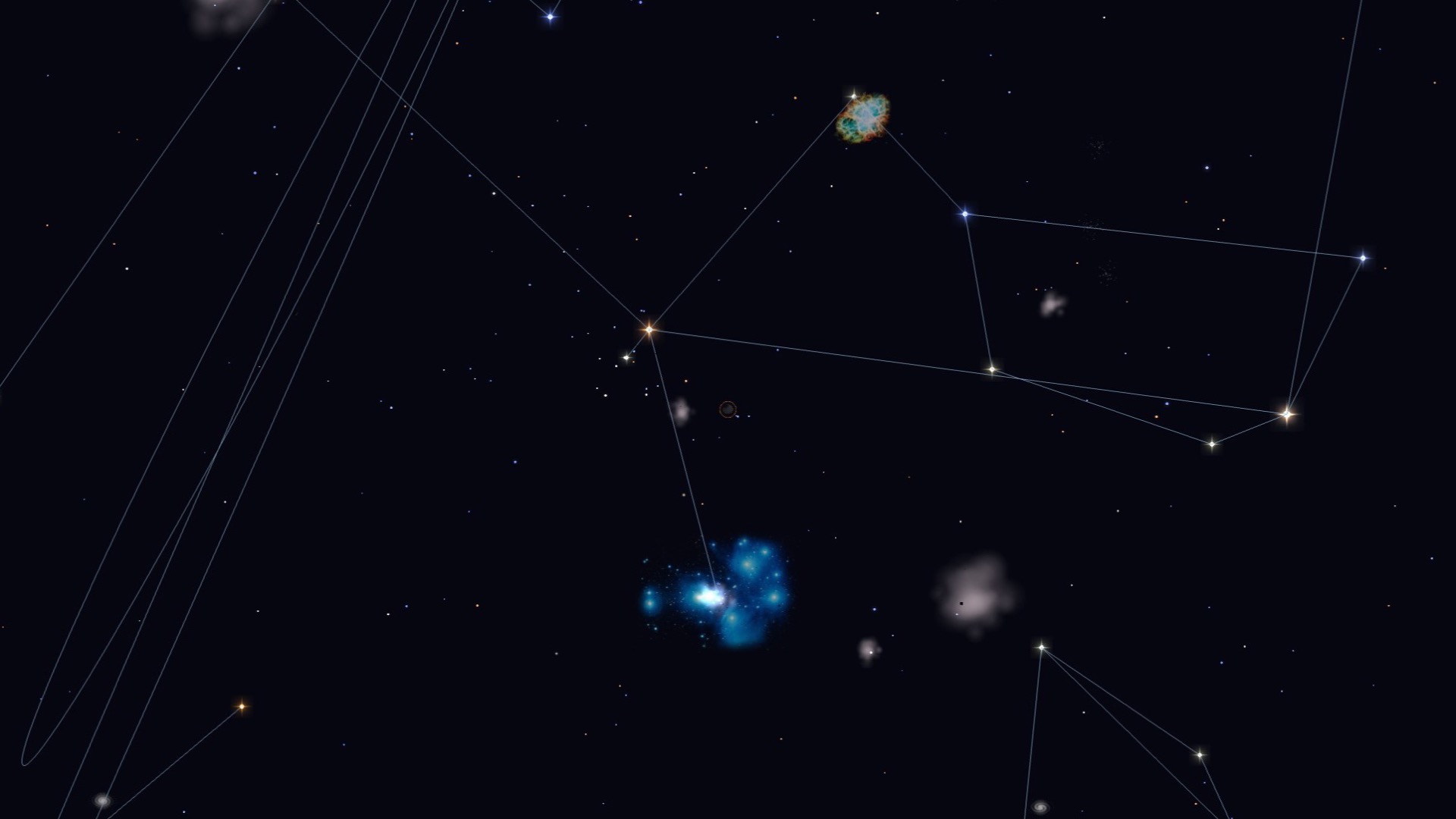
Seven nights from astronomy history
Each link opens the app with the clock and camera already set to the historic moment.
💥 July 4, 1054: the Crab supernova ignites
Chinese astronomers record a "guest star" blazing in the dawn beside Tianguan. The supernova stayed bright enough to see in daylight for 23 days, and its remains are today's Crab Nebula. Watch it burn in the 1054 dawn →
🔭 January 7, 1610: Galileo sees Jupiter's moons
Three little "stars" in a line beside Jupiter, moving night by night. They were moons of another world, and the Earth-centred universe never recovered. See their exact arrangement that evening →
🌀 March 13, 1781: Herschel discovers Uranus
From a back garden in Bath, Herschel spots a "curious nebulous star" that appears on no chart. It turned out to be the first planet found since antiquity. Stand in his garden and find it →
🔵 September 23, 1846: Neptune, found by mathematics
Le Verrier computed where an unseen planet had to be. Galle found it the night the letter arrived, within one degree. See Berlin's sky that night →
🌑 May 29, 1919: the eclipse that proved Einstein right
Eddington photographed stars beside the eclipsed Sun from Príncipe and measured their light bending around it. General relativity passed its first big test. Stand under that totality →
🌌 September 2, 1859: the Carrington Event
The greatest geomagnetic storm on record sent aurora as far south as the Caribbean and left telegraphs running on sky-current. See Earth wrapped in storm aurora →
🌍 December 24, 1968: Earthrise
Apollo 8 rounds the Moon and humanity sees its own planet rise. Visit the Moon at that instant →
How it works
Astronomy Engine supplies positions for dates from 1500 to 3000 CE. Each link sets the date, location, and camera, after which you can move time forward, change the observing site, or explore the rest of the scene.